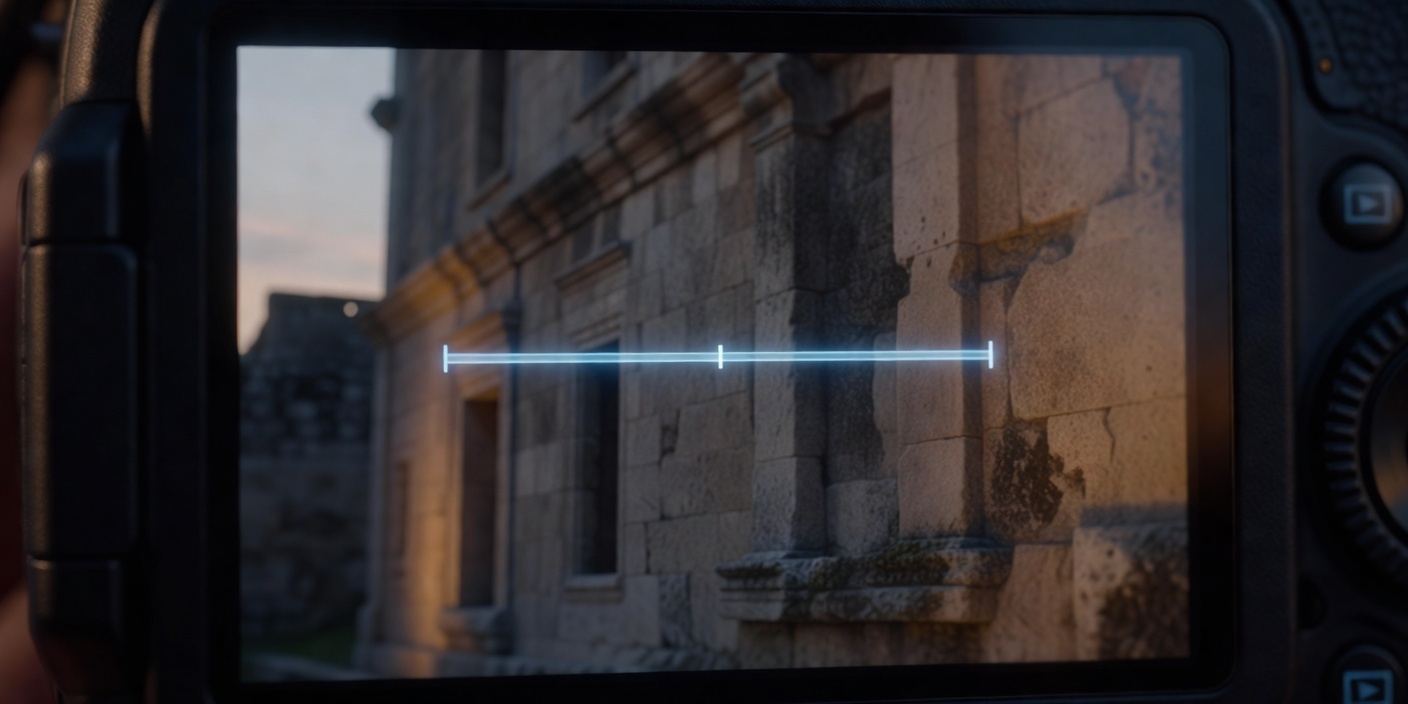
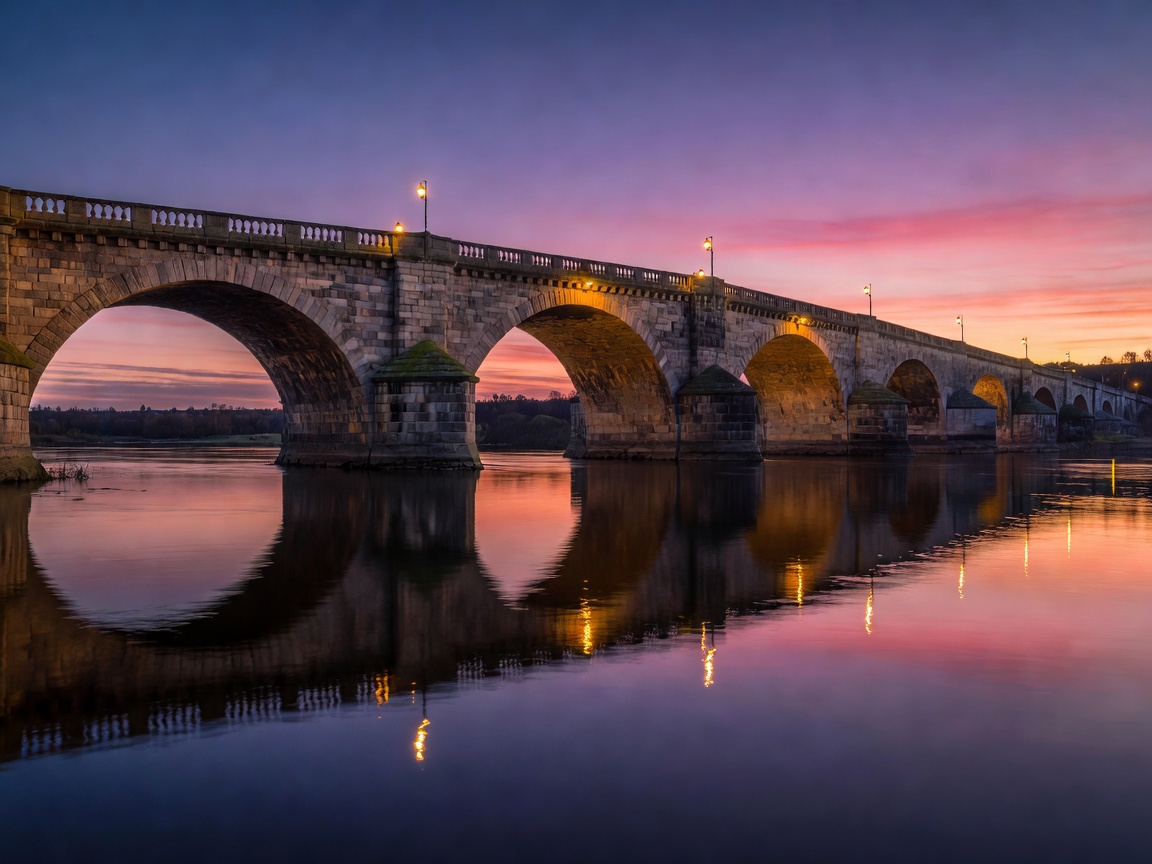
Tonight's scene: choose a building that is lit on purpose: a town hall with floodlights, a church with glowing windows, a bridge outlined in LED strips. Arrive before sunset, frame it while you can still see detail in the ground, and keep shooting through twilight as the building lights and the sky cross over in brightness.
Twilight is a brightness match, not a colour rule
The period photographers call "blue hour" is useful less for its colour than for its balance: the sky's brightness falls to roughly the level of the artificial lighting, so the facade, the sky and the shadows fit within a single exposure. Its length depends on latitude and season. In mid-summer in northern Scotland twilight lingers for hours; near the equator it can be over in twenty minutes. A sunrise and sunset table will tell you when civil twilight ends; start shooting a little before it.
Starting settings and why
Begin at ISO 100 and f/8, then let the shutter run for whatever the meter suggests, often 2 to 8 seconds early in twilight and 15 to 30 seconds later. The narrower aperture keeps near and far parts of a large building sharp. Long shutter times also thin out moving people in a plaza, leaving faint ghosts at most. If floodlights burn out to pure white, bracket: one frame for the highlights, one for the mid-tones and one for the shadows, two stops apart. Blend them carefully, or simply choose the frame that best protects the lit stonework.
Keep the verticals honest
Tilting a camera upward makes tall buildings appear to lean backward. Keep the camera level with its electronic level, step back, and crop later; or use a tilt-shift lens, which moves the image instead of tilting the camera. Perspective correction in editing software works too, but it discards the edges of the frame, so leave generous space around the building when you compose.
Mixed light and white balance
Older streets often mix sodium lamps with newer LEDs, and floodlights may differ again. Shoot RAW so white balance stays adjustable, then choose a setting that keeps the main facade natural. A slightly warm building usually looks more believable than a perfectly neutral one.
| Light source | Approx. colour temperature | Appearance |
|---|---|---|
| Sodium vapour streetlight | 1800–2200 K | Deep orange |
| Warm white LED | 2700–3000 K | Soft amber |
| Neutral LED | about 4000 K | Clean white |
| Metal halide floodlight | 4000–5000 K | Crisp white on stone |
Reflections and rain
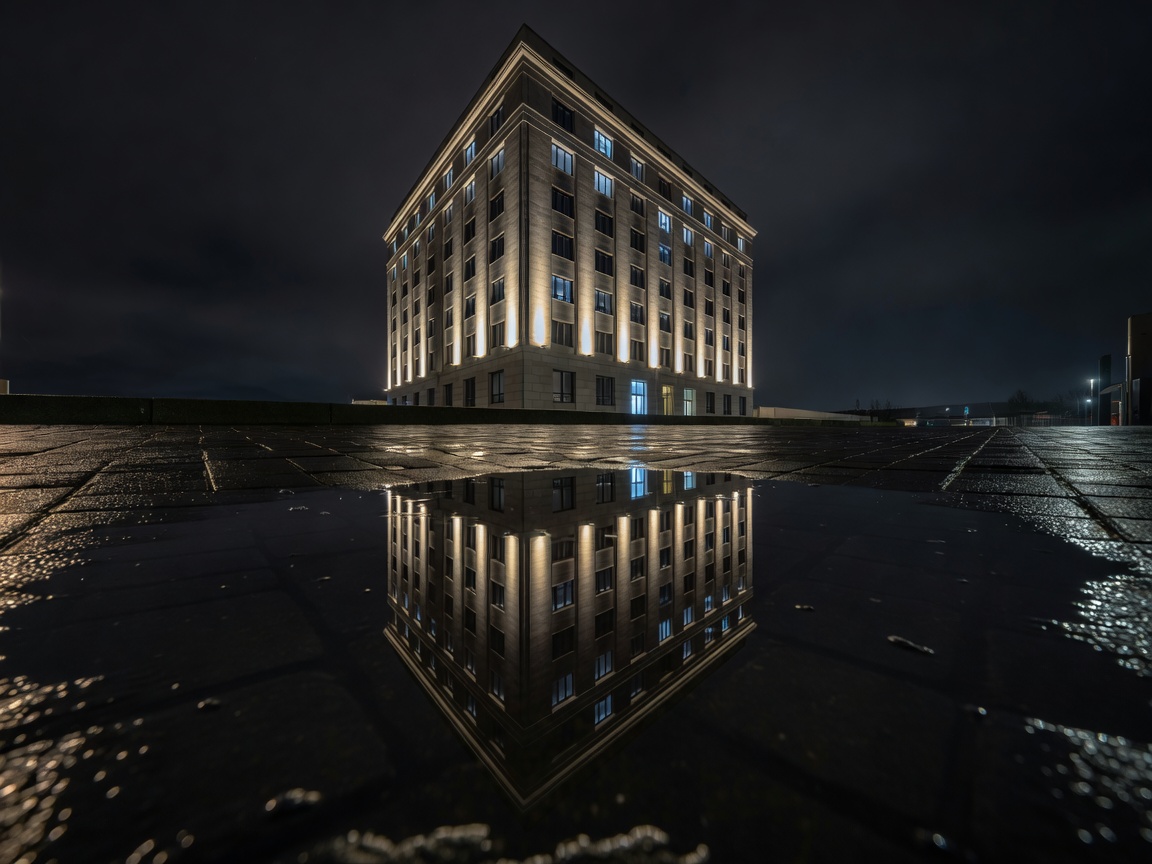
After rain, wet paving becomes a mirror. Lower the tripod until the lens sits a few centimetres above a puddle; the closer you get, the larger the reflection appears. Wipe the front element between frames, because fine mist builds up quickly. Still water does the same on calm evenings, whether it is the harbour in front of the Sydney Opera House or the Spree beside Berlin's Museum Island. A 30-second exposure smooths small ripples into something close to glass.
Permission and lighting designs
Photographing a building from a public place is generally fine for personal use, but some lighting designs carry their own rights. The operator of the Eiffel Tower treats its illuminations as a protected work, so commercial use of night images requires permission. Private estates, shopping centres and many stations ask that tripods are not used without a permit. Check before you set up, and if security approaches, explain what you are doing calmly.
Technique notes
Windows look like white holes
Interior lights are often brighter than floodlights. Take one darker bracket and blend only the windows, or shoot earlier when the facade is brighter relative to the interiors.
The sky turned completely black
You waited too long. Return tomorrow fifteen minutes earlier, or blend in a sky frame taken at twilight from the same tripod position.
Ghosts of people in the plaza
Lengthen the exposure with an ND filter so moving people blur away, or take several frames and use a median stack to remove them.