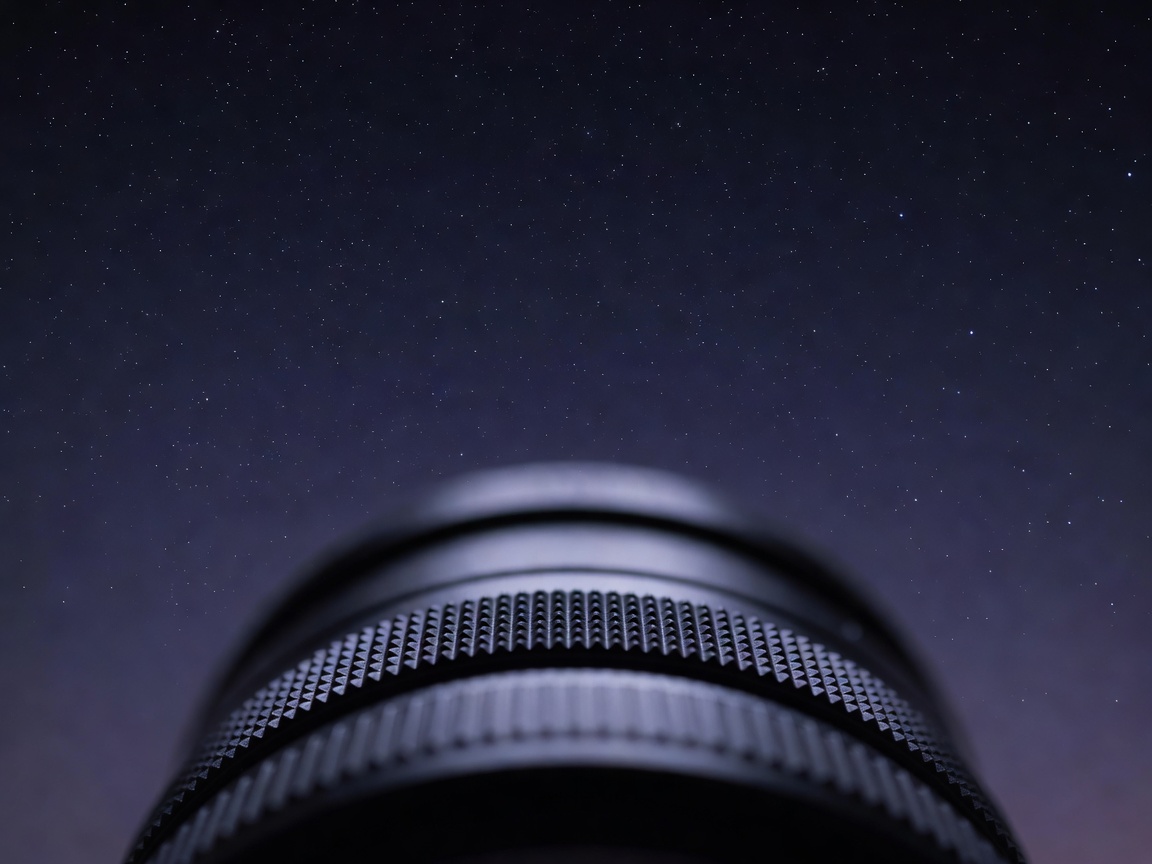
Tonight's scene: drive 30 to 60 minutes away from the nearest town, check that the moon has set or is a thin crescent, and find a foreground with a clean silhouette: a ridge, a lone tree, a field barn. Give your eyes twenty minutes without a phone screen. The sky you see then is close to what the sensor can collect.
Darkness decides more than your lens
Light pollution washes out faint stars far more than any lens limitation. The Bortle scale, published by the amateur astronomer John E. Bortle in Sky & Telescope in 2001, grades skies from class 1, the darkest, to class 9, an inner-city sky. Moving from a suburban class 6 to a rural class 3 transforms results. Certified dark places such as Galloway Forest Park in Scotland, the Aoraki Mackenzie reserve in New Zealand and the NamibRand Nature Reserve in Namibia are recognised by DarkSky International, and the high, dry Atacama Desert in Chile hosts major professional observatories for the same reason.
Pinpoint stars: the shutter limit
The Earth rotates about 15 degrees per hour, so stars drift across the sensor during any exposure. The old "500 rule" divides 500 by the full-frame focal length: 500 ÷ 20 mm gives 25 seconds. It was devised in the film era and, on today's dense sensors, often leaves stars slightly elongated when viewed closely. The NPF rule, formulated by Frédéric Michaud of the Société d'Astronomie Populaire, also accounts for aperture and pixel size, and typically suggests shorter times, around 10 to 15 seconds at 20 mm. Many photographers use it through a planning app.
The resulting trade-off is clear: a short shutter keeps stars round, so the missing light has to come from a wide aperture and higher ISO. Start at f/2.8, ISO 1600 to 3200 and 15 to 20 seconds, then check a magnified star at the corner of the frame.
Focus without a focus target
Autofocus rarely locks on stars, and the infinity mark on many lenses sits slightly past true infinity. Switch to manual, open live view, magnify on the brightest star or planet visible — Jupiter, Vega or Sirius depending on the season — and turn the ring slowly until the point is smallest. A strip of tape holds the ring in place. Recheck after an hour, as cooling can shift focus slightly.
Star trails: two methods
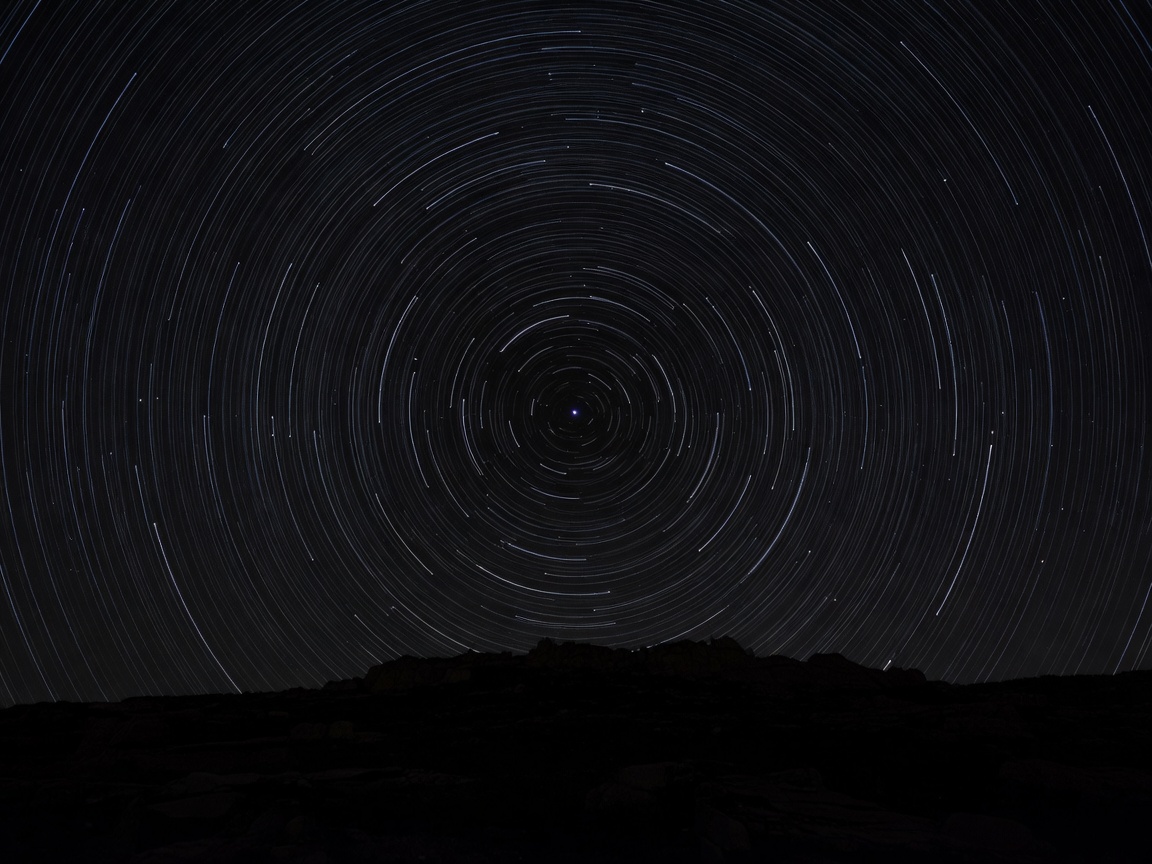
A single long exposure in Bulb mode, perhaps 30 to 60 minutes at ISO 200 and f/5.6, produces continuous trails in one file, but the sensor warms, hot pixels appear, and long exposure noise reduction then doubles your wait. Most photographers prefer stacking instead: an intervalometer fires 30-second frames with a one-second gap at ISO 400 to 800 for an hour or two, and software such as StarStaX or a lighten blend in an editor merges them. Stacking also lets you discard frames spoiled by aircraft or a passing headtorch.
Direction shapes the result. In the northern hemisphere, aiming toward Polaris gives concentric circles; in the southern hemisphere, the pole lies near the faint star Sigma Octantis. Facing east or west produces long diagonal lines instead. In one hour, each trail sweeps an arc of about 15 degrees.
Cold, dew and batteries
Dew forms when the lens cools below the dew point, often silently clouding a whole sequence. A USB lens-heater band or a hand warmer strapped around the barrel prevents it. Batteries lose capacity in the cold, so keep spares in an inner pocket. A red torch preserves your night vision and annoys fellow observers less.
Plan around the moon and meteor showers
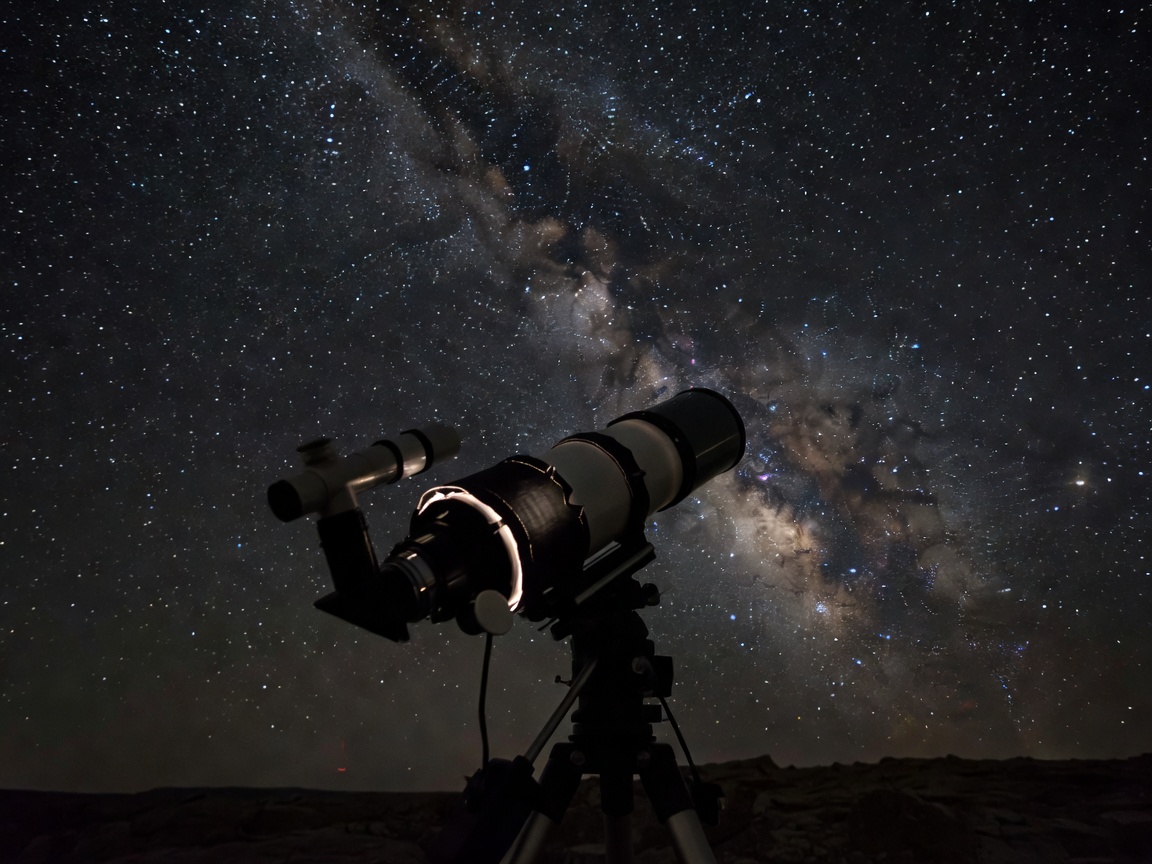
The week around new moon gives the darkest skies. In the northern hemisphere, the bright core of the Milky Way is best placed roughly from March to September. The Perseids peak around 12–13 August and the Geminids around 13–14 December; a wide lens, the pinpoint settings above and an intervalometer running all night give you the best chance of catching meteors. As always, these settings are starting points, not promises.
Technique notes
Stars look like short dashes
The shutter was too long for the focal length. Shorten by a third, raise ISO by the same amount, and check again.
Orange glow along the horizon
That is light pollution from a town. Turn to face away from it, or include it as an honest part of the scene.
Gaps in my star trails
The interval between frames was too long, or noise reduction was on. Set the gap to one second and disable in-camera long exposure noise reduction.