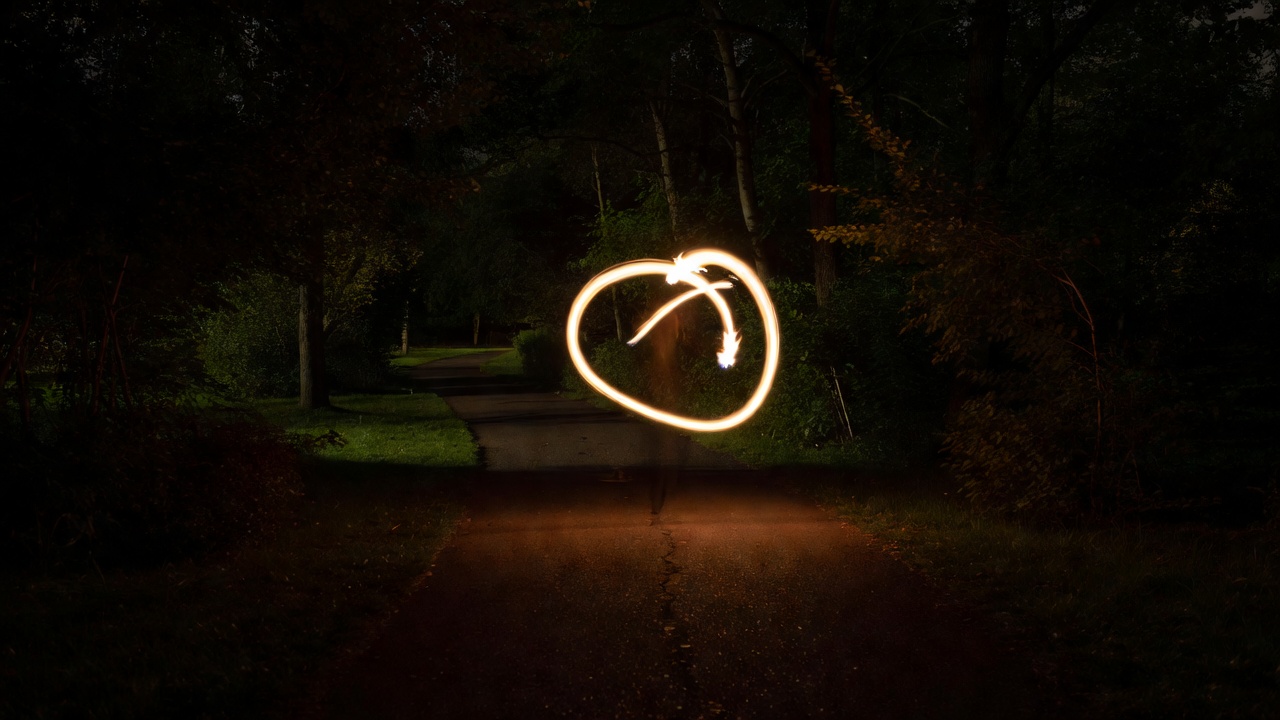
Tonight's scene: a dark park path, a friend with a small torch and a camera on a tripod set to 30 seconds. Walk into the frame, draw a shape in the air, walk out. You appear only where you stood still long enough for the sensor to register you, which is the principle behind almost every experiment on this page.
Light painting: drawing with time
Using moving light to record motion has a long history. Around 1914, the engineers Frank and Lillian Gilbreth fixed small lamps to workers' hands to trace movement in their motion studies. In 1949, the photographer Gjon Mili visited Pablo Picasso for LIFE magazine and photographed him drawing figures in the air with a small light. The method has not changed much: ISO 100, f/8 to f/11, and 30 seconds or Bulb with a remote.
Point the torch toward the camera to draw lines; point it at objects to "paint" them with light, sweeping steadily so the surface fills evenly. Wear dark clothes, keep moving, and count your strokes so you can repeat a good one. The narrow aperture gives you time to work without overexposing the light itself.
Intentional camera movement
Here the camera moves instead of the light. Use a shutter between 1/4 and 2 seconds and sweep the camera vertically past lit windows, along a row of streetlights or up a tree against a glowing sky. The results are unpredictable, which is the point: take thirty frames, vary the speed of your movement, and expect to keep two or three. A smooth, committed movement usually looks better than a hesitant one.
Zoom bursts
With a zoom lens on a tripod, set a one- to two-second exposure, hold the zoom still for the first half, then turn the ring steadily for the rest. The centre stays recognisable while lights stretch outward like rays. Lit signs and Ferris wheels work well. It is a technique that tires quickly, so use it sparingly.
Rain, glass and reflections
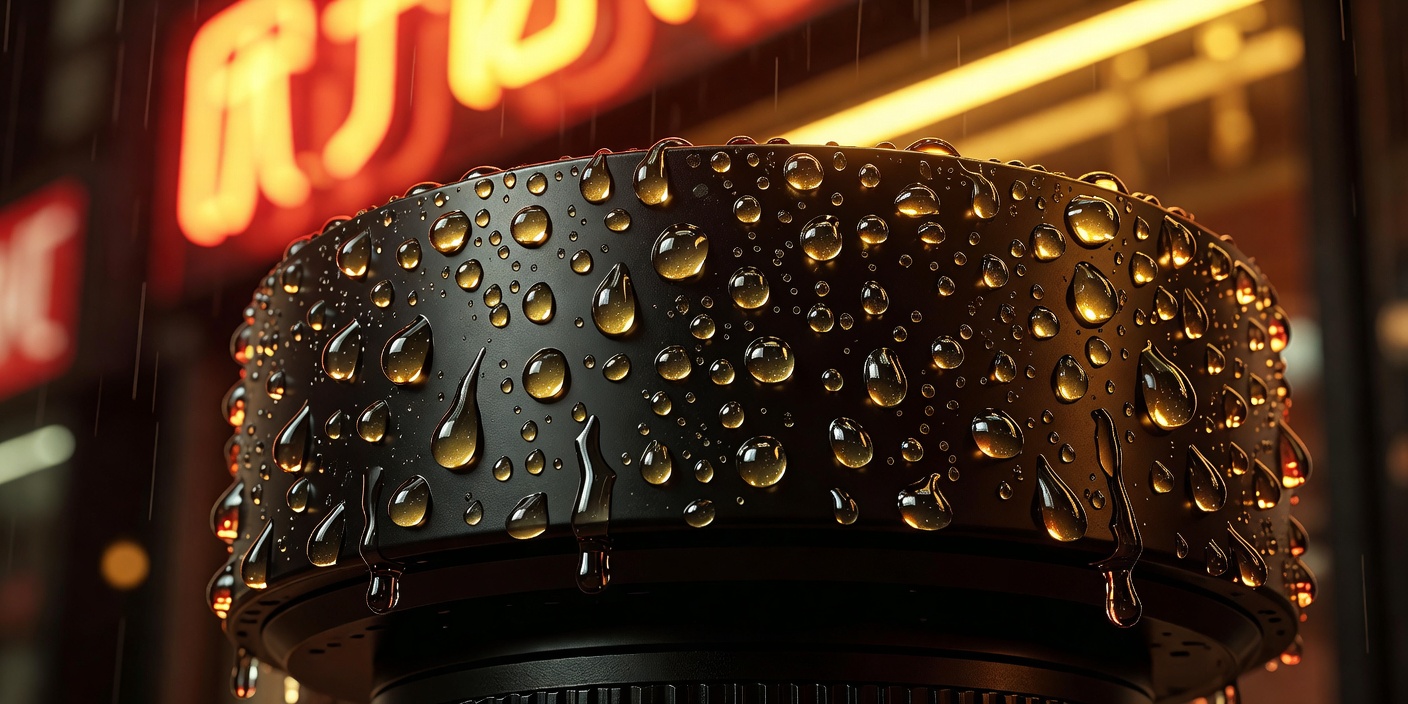
A rainy night gives you a free experiment. Photograph through a car or café window, focus on the drops, and open the aperture to f/2 or wider so the streetlights beyond melt into large discs. Alternatively, stay on the tripod outdoors and let a 10-second exposure blur passing umbrellas across a reflective pavement while the wet street stays sharp.
Fireworks
Fireworks are short long exposures. Set ISO 100, f/8 to f/11, manual focus pre-set on the first burst, and use Bulb with a remote: open as a rocket climbs and close after one to four bursts, usually two to six seconds. Too many bursts in one frame turn into a white blur, so fewer is often better.
ND filters before full dark
A 6- or 10-stop neutral density filter lets you start long exposures at sunset, when clouds still carry colour and water reflects the sky. Compose and focus before attaching the filter, because the viewfinder goes nearly black, then multiply your metered shutter time accordingly.
Steel wool: only with care, or not at all
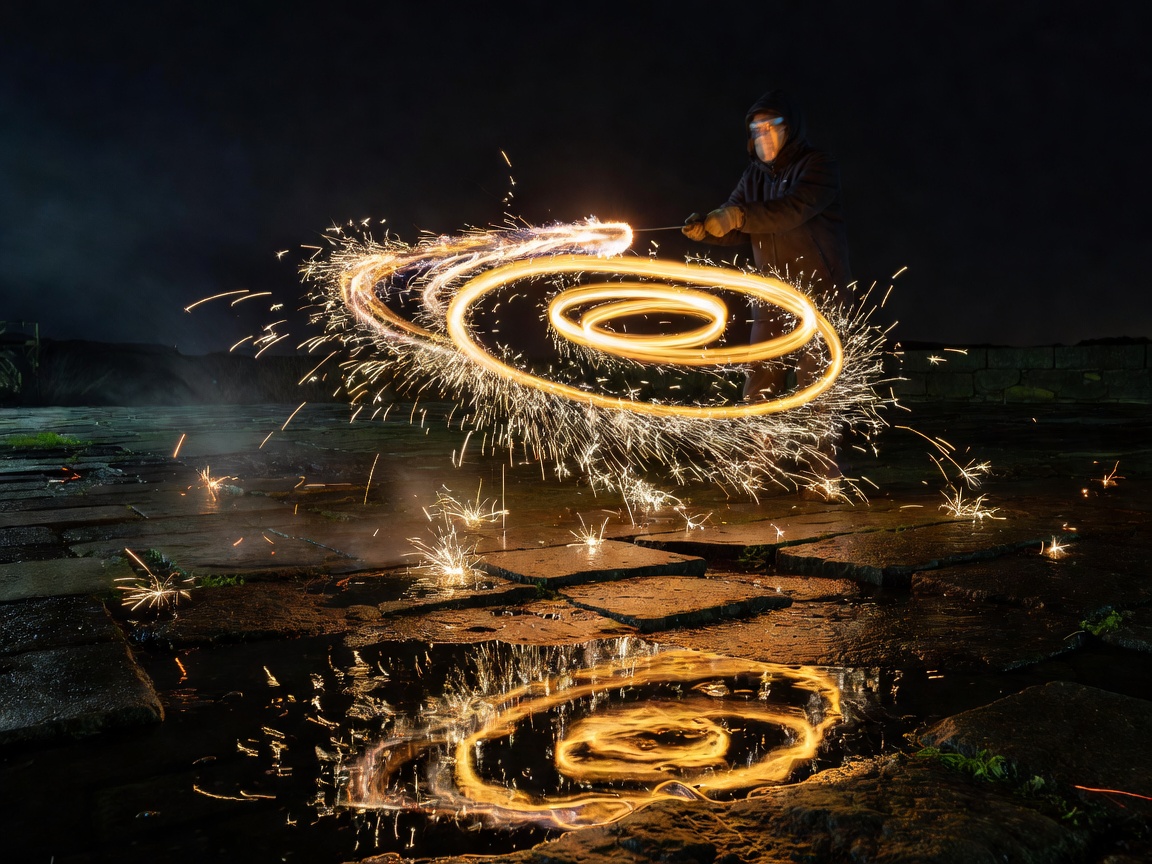
Spinning burning fine steel wool in a whisk on a chain produces spectacular sparks, and also a genuine fire risk. If you try it, get permission from the landowner, choose bare stone, sand or a wet beach far from vegetation, avoid dry seasons entirely, wear safety glasses, cover your hair, keep water or an extinguisher at hand, and keep onlookers well back. Many parks and beaches prohibit it. If any of these conditions cannot be met, choose a torch instead.
Technique notes
I appear as a ghost in my light painting
You paused while facing the camera, or a torch spilled light onto you. Keep moving, shield the torch with your hand, and wear dark clothing.
Camera movement shots look like mistakes
Choose one direction that matches the subject, such as vertical for trees, and make it smooth. A clear shape helps the viewer read the movement as intentional.
Keep a settings notebook
Write down shutter, aperture, ISO and what you did during each frame. Experiments become repeatable techniques once you know what produced them.